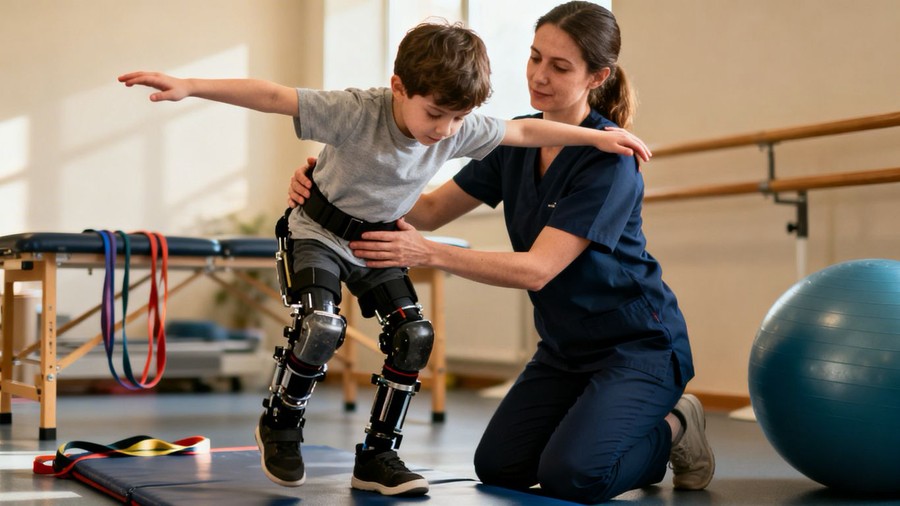
Defining Spasticity and Its Prevalence
Spastic cerebral palsy is the most frequently observed type, making up around 80% of all diagnosed cases. This condition is characterized by increased muscle tone, a state known as spasticity. This heightened muscle tension leads to muscles that are stiff and rigid, resulting in movements that can appear awkward or jerky. The underlying cause is damage to the brain’s motor cortex, the area responsible for controlling voluntary muscle actions. Because different parts of the motor cortex manage distinct body movements, spasticity can manifest in various ways depending on the affected areas. This type of cerebral palsy can significantly impact a person’s ability to move freely and coordinate their actions. Understanding the specifics of spastic cerebral palsy is key to grasping the broader landscape of this condition.
Subtypes of Spastic Cerebral Palsy
Spastic cerebral palsy is further categorized based on the specific body parts affected. These subtypes help in describing the precise pattern of muscle stiffness and its impact:
- Spastic Diplegia: Primarily affects the legs, causing stiffness and making walking difficult. The arms may be less affected or not affected at all.
- Spastic Hemiplegia: Involves only one side of the body, typically affecting the arm more than the leg on that side.
- Spastic Quadriplegia: This is the most severe form, affecting all four limbs, the trunk, and sometimes the face. Individuals with spastic quadriplegia often require extensive lifelong support and may have additional developmental challenges.
Common Symptoms and Manifestations
The hallmark symptom of spastic cerebral palsy is the increased muscle tone, which can lead to a range of difficulties. These may include:
- Muscles that are constantly tight or stiff.
- Exaggerated reflexes, meaning muscles may react more strongly than usual to stimuli.
- Joints that may involuntarily bend due to muscle tightness, leading to contractures (permanently tightened muscles or joints).
- Challenges with motor skills, such as difficulty with crawling, walking, or maintaining an upright posture.
In some instances, the stiffness can cause limbs to cross or turn inward, a phenomenon often referred to as “scissoring” when it affects the legs. The severity of these symptoms can vary greatly from person to person, influencing their daily activities and the type of support they might need.
Exploring Dyskinetic Cerebral Palsy
Characteristics of Dyskinetic Movements
Dyskinetic cerebral palsy, sometimes called athetoid cerebral palsy, comes about when there’s damage to a part of the brain known as the basal ganglia. This area is pretty important because it helps coordinate movements by sorting through signals from the motor cortex and our senses. When this part of the brain is affected, it can lead to a range of involuntary movements. These aren’t just random twitches; they can be slow and writhing, or sometimes quite rapid and jerky. It’s not uncommon for the face and tongue muscles to be involved too, which can make things like sucking, swallowing, and talking a real challenge. People with dyskinetic CP often experience fluctuating muscle tone, meaning it can feel too tight one moment and too loose the next, sometimes even changing throughout the same day. This variability can make consistent movement control particularly difficult.
Impact on Daily Activities
The uncontrollable movements associated with dyskinetic cerebral palsy can significantly affect a person’s ability to perform everyday tasks. Simple actions like sitting upright, walking, or reaching for an object can become quite demanding. Fine motor skills, which involve the precise use of hands and fingers for tasks like writing or buttoning a shirt, are often impacted. Gross motor movements, like moving the arms and legs or maintaining balance, are also affected. Because the movements are involuntary, individuals might find it hard to keep their body steady, leading to difficulties in various situations. Managing these challenges often requires adaptive strategies and support to help individuals achieve greater independence in their daily lives. Learning more about dyskinetic cerebral palsy can provide a better understanding of these impacts.
Neurological Basis of Dyskinetic CP
The root of dyskinetic cerebral palsy lies in damage to the basal ganglia, a group of structures deep within the brain. These structures play a vital role in regulating voluntary movement, learning new motor skills, and processing sensory information. When the basal ganglia are impaired, the brain’s ability to send and receive the correct signals for smooth, coordinated muscle activity is disrupted. This can manifest in several ways:
- Athetosis: Characterized by slow, writhing, and continuous movements.
- Chorea: Involves rapid, jerky, and irregular movements.
- Dystonia: Leads to sustained muscle contractions that cause twisting and repetitive movements, often resulting in abnormal postures.
It’s important to note that individuals may experience a combination of these movement patterns. The specific location and extent of the brain damage within the basal ganglia will influence the type and severity of the dyskinetic movements observed.
Investigating Ataxic Cerebral Palsy
Ataxic cerebral palsy is a less common form of the condition, making up a small percentage of all cases. This type primarily affects a person’s balance and coordination. The cerebellum, a part of the brain responsible for these functions, is typically impacted. This can lead to movements that appear unsteady or shaky, and muscle tone might be lower than usual.
Balance and Coordination Impairments
Individuals with ataxic cerebral palsy often experience difficulties in maintaining equilibrium and performing smooth, controlled movements. This can manifest in several ways:
- Unsteady gait: Walking may be characterized by a wide stance, with feet spread apart to improve stability.
- Tremors: A fine shaking, often noticeable when trying to perform voluntary movements, can be present.
- Difficulty with fine motor skills: Tasks requiring precise hand movements, like writing or buttoning clothes, can be challenging.
- Problems with depth perception: Judging distances accurately can be an issue, affecting activities such as reaching for objects.
Effects on Motor Skills and Perception
The impact of ataxic CP extends to various motor skills. It’s not just about large movements; even subtle actions can be affected. Speech can also be impacted, sometimes sounding slurred or uneven due to difficulties in coordinating the muscles involved in speaking. This type of cerebral palsy can make it hard to gauge how far away things are, which affects everyday actions. Understanding these specific challenges is key to providing appropriate support and interventions for individuals with ataxic cerebral palsy ataxic cerebral palsy.
Cerebellar Damage and Its Consequences
The root cause of ataxic cerebral palsy lies in damage to the cerebellum. This brain region is vital for motor control, learning new movements, and coordinating actions. When this area is affected, the brain’s ability to send precise signals for movement is disrupted. This can result in a range of motor control issues, from mild unsteadiness to significant challenges in performing daily tasks. The consequences are varied, influencing everything from walking and grasping to speaking and even eye movements.
Recognizing Hypotonic Cerebral Palsy
Defining Low Muscle Tone
Hypotonic cerebral palsy, sometimes referred to as atonic cerebral palsy, accounts for approximately 2.6% of all cerebral palsy cases. This classification is characterized by significantly reduced muscle tone, often described as ‘floppy’ muscles. This lack of firmness and strength can present a unique set of challenges for individuals. The defining feature is the decreased resistance to passive movement.
Challenges with Posture and Movement Control
The reduced muscle tone associated with hypotonic CP directly impacts an individual’s ability to maintain posture and control their movements. This can manifest in several ways:
- Difficulty holding the head steady, especially in infants.
- Challenges in sitting upright without support.
- A tendency to lean or slump due to poor trunk stability.
- Increased flexibility in joints and ligaments, which can sometimes lead to dislocations.
Symptoms of Hypotonic CP
Recognizing the signs of hypotonic cerebral palsy is important for early intervention and support. Common symptoms include:
- Overall weakness and a feeling of being ‘limp’.
- Poor balance and stability, making walking or other weight-bearing activities difficult.
- Delayed motor milestones, such as not being able to roll over, sit up, or crawl at the expected ages.
- Sometimes, speech can be affected due to poor muscle control in the mouth and throat.
While hypotonic CP presents distinct challenges, a thorough medical evaluation, which may include an MRI, helps in understanding the specific presentation and developing an appropriate support plan. Early diagnosis and intervention are key to managing the condition and improving an individual’s quality of life.
Identifying Mixed Cerebral Palsy
Sometimes, the damage to a developing brain isn’t limited to just one area. When this happens, a child might show signs of more than one type of cerebral palsy. This is what we call mixed cerebral palsy. It’s not uncommon, with about 15.4% of all cases falling into this category.
Understanding Combined Symptoms
Mixed cerebral palsy means a person experiences a combination of symptoms from two or more of the main types of CP. For instance, someone might have the stiff, jerky movements characteristic of spastic CP along with the involuntary, writhing motions seen in dyskinetic CP. This combination can make diagnosis and treatment planning a bit more complex, as it requires addressing multiple types of motor challenges.
Common Combinations of CP Types
While many combinations are possible, some are seen more frequently than others. The most common pairing is spastic-dyskinetic cerebral palsy. This means a person might have both increased muscle tone leading to stiffness and involuntary movements that are difficult to control. Other combinations could involve ataxic features, like problems with balance and coordination, alongside spasticity.
Varied Presentation of Mixed CP
The way mixed cerebral palsy presents can vary quite a bit from one individual to another. The specific symptoms and their severity depend on which areas of the brain were affected and to what extent. This means that two people with mixed CP might have very different daily experiences and challenges.
Some common ways mixed CP can show up include:
- Stiffness in certain muscles combined with uncontrolled movements in others.
- Difficulties with balance and coordination alongside issues with muscle tone (either too high or too low).
- Impact on different body parts in unique ways, for example, one side of the body might be more affected by spasticity while the legs show ataxic symptoms.
Understanding these combined symptoms is key to developing a personalized care plan that addresses all aspects of the individual’s condition.
Classifying Cerebral Palsy by Affected Body Parts
Monoplegia: Affecting a Single Limb
This classification looks at which parts of the body are impacted. Monoplegia is a less common type where only one limb, like an arm or a leg, shows movement difficulties. It’s like a specific issue in just one area.
Diplegia: Impact on Two Limbs
Diplegia typically affects two limbs, and most often, it’s the legs. Sometimes, there might be slight issues in the upper body too, but the main focus is on the lower half. This often happens with babies born a bit too early.
Hemiplegia: Involvement of One Side of the Body
When we talk about hemiplegia, it means one entire side of the body is affected. Usually, the arm on that side has more trouble than the leg. You might see things like a wrist or elbow that stays bent in a stiff way. Sometimes, bleeding in the brain before birth can lead to this.
Quadriplegia: Affecting All Four Limbs
Quadriplegia is when all four limbs are involved. The legs are generally more affected than the arms. It can also impact the muscles in the torso, making it hard to control posture. People with quadriplegia might also have trouble with facial muscles, which can affect talking, eating, and swallowing. This is often considered the most severe form.
Mixed Cerebral Palsy
It’s also important to know that sometimes a person can have symptoms from more than one of these classifications. For example, someone might have a diagnosis like “spastic diplegia” or “spastic hemiplegia.” This helps paint a clearer picture of how cerebral palsy affects an individual’s movement and body.